Advanced — Manual Editing
AudioContext.setSinkId, not supported in Safari) and a secure context — this page already qualifies (HTTPS in production, localhost in dev).| Body | Freq (Hz) | Volts | Ch |
|---|
| Body | Orbital velocity | True freq | Note | Cents | Actual octave |
|---|
| Body | Note | Target ¢ |
|---|
How the Planets Make Harmony
Every planet is orbiting the Sun — going around, again and again. Any motion that repeats has a rate: how many times it happens per second. That rate is exactly what a frequency is. So in a very real sense, every planet is already playing a note — just an impossibly slow, impossibly quiet one, an octave (or forty) below anything a human ear could ever register.
This page takes that literally. It pulls each planet's real, instantaneous orbital speed — not an average, the actual rate right now, which genuinely changes as a planet swings closer to or farther from the Sun (faster near perihelion, slower near aphelion — Kepler's Second Law) — straight from NASA JPL's own orbital data, the same source real spacecraft navigation uses. That speed converts directly into Hertz: cycles per second, the same unit as any other sound.
Those real Hertz numbers are absurdly low — even Mercury, the fastest planet, only completes one orbit every 88 days. So every planet is shifted up by the exact same number of octaves — one doubling of frequency, applied identically to all nine voices — until Earth lands around 110Hz, an audible register. Nothing about how the planets relate to each other changes in that shift; the whole chord just moves up together, like transposing an entire orchestra at once. What you hear is never invented, never rounded to a scale someone made up to sound nice — it's the actual mathematics of nine real orbits, moved into hearing range and nothing else.
"A twelve-year-old can sit down and discover Jupiter's chord on the day they were born, with zero math. That accessibility is the whole point — the physics does the work, the human just has to be willing to explore."
It doesn't stop at "now," either. Because the planets' positions are exact for any date, real or far future, the date itself becomes something you can play — the solar system as it actually sounded the year Kepler published his own harmonic theory, or as it will sound five thousand years from now. Each one is a genuinely different, physically real chord.
A Brief History of Trying to Hear This
The idea that the planets' motion constitutes a form of music is at least 2,500 years old, and it was argued about from the start. Every entry below is a real attempt to answer the same question — read top to bottom, it's a lineage, not a list.
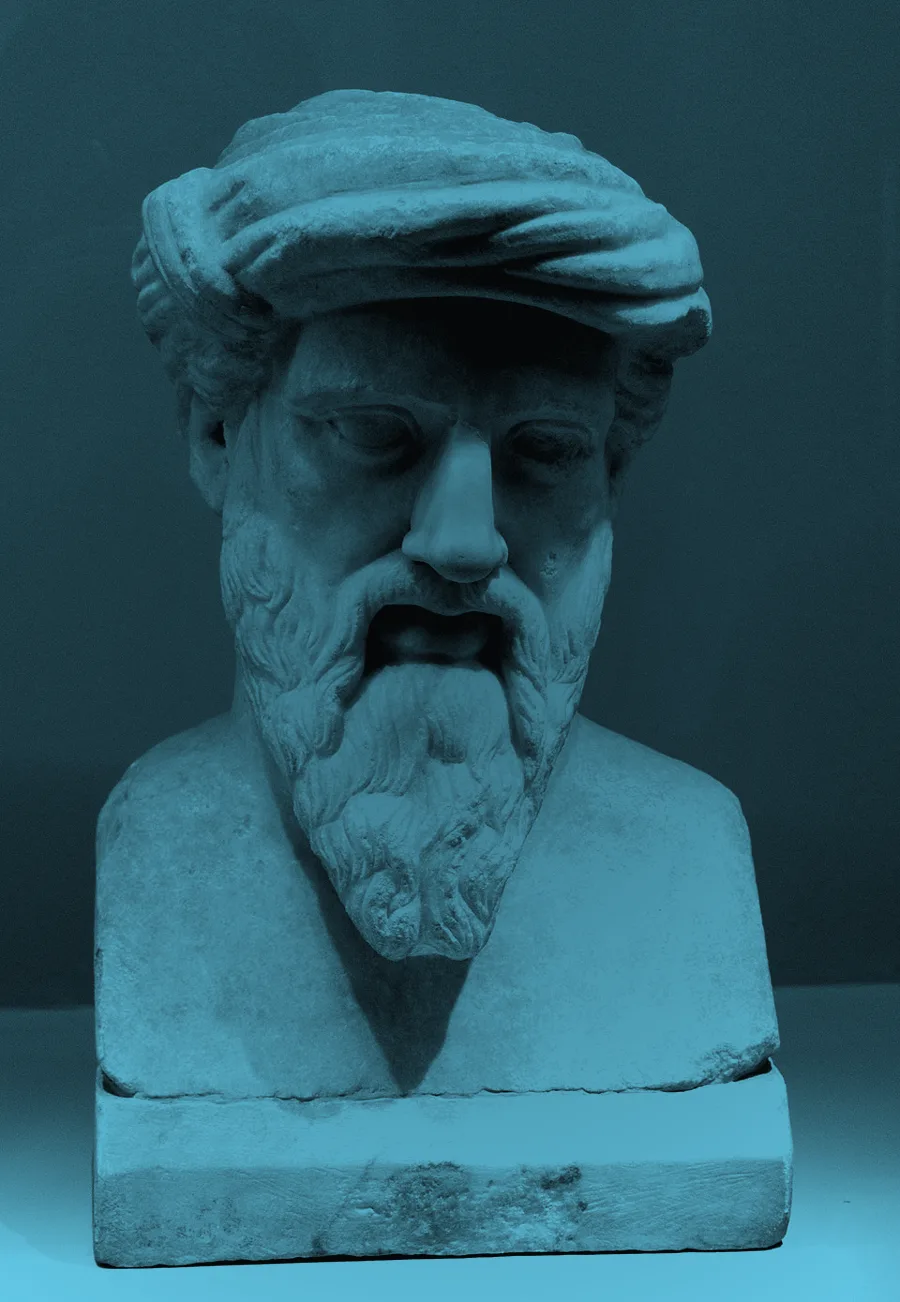
Pythagoras and his school proposed musica universalis — that each celestial body, moving at its own speed along its own orbit, produces a tone determined by that speed, and that the combined motion of all of them is a real, physical harmony. Pythagorean cosmology held that this harmony is inaudible to us not because it isn't real sound, but because we have heard it continuously since before birth — the mind filters out a sound with no silence to contrast it against.
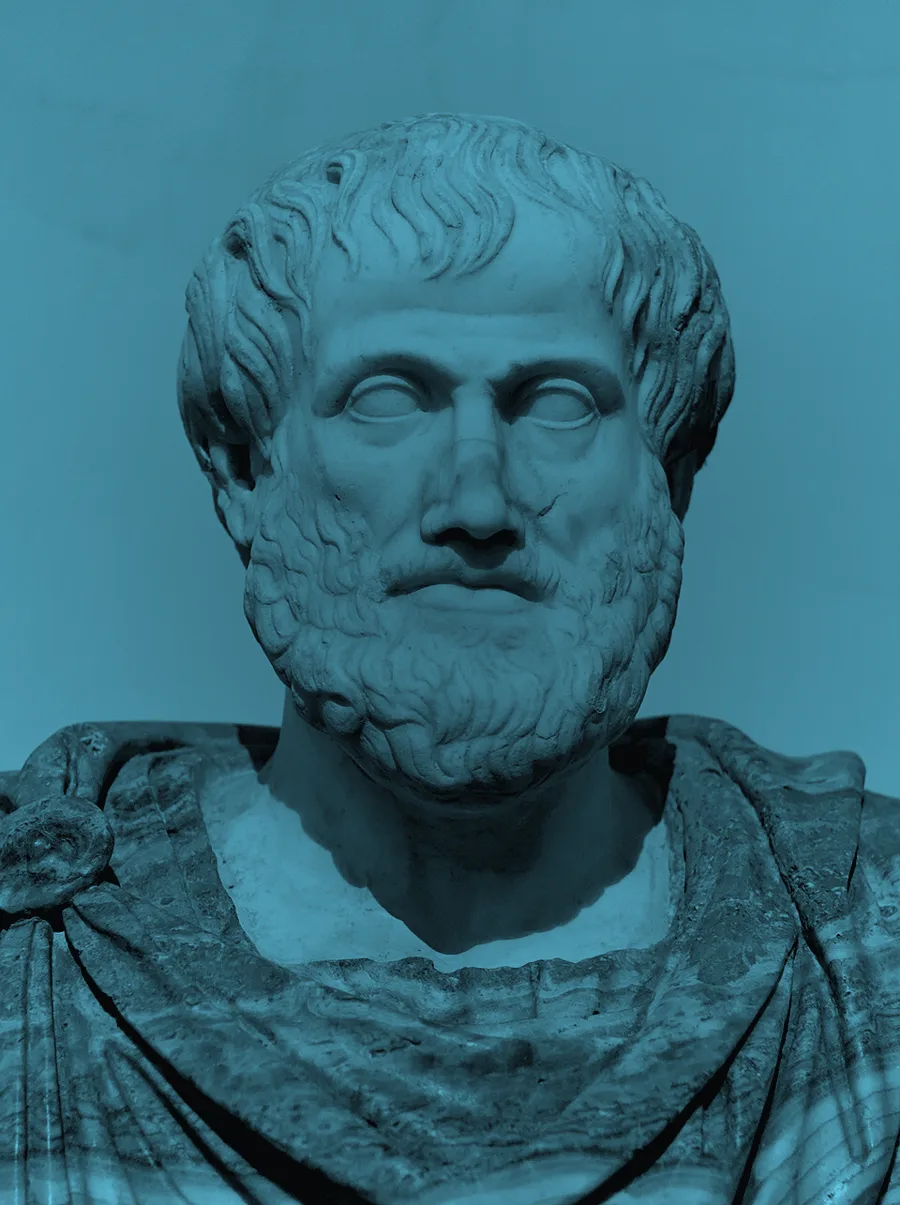
Aristotle took the idea seriously enough to refute it directly. In On the Heavens, he argued that bodies that large, moving that fast, would have to produce an unimaginably loud sound — and since we plainly don't hear one, the Pythagorean picture had to be wrong. It's worth knowing this critique existed alongside the original idea for as long as it has: "the music of the spheres" was never universally accepted as literal, even in antiquity.
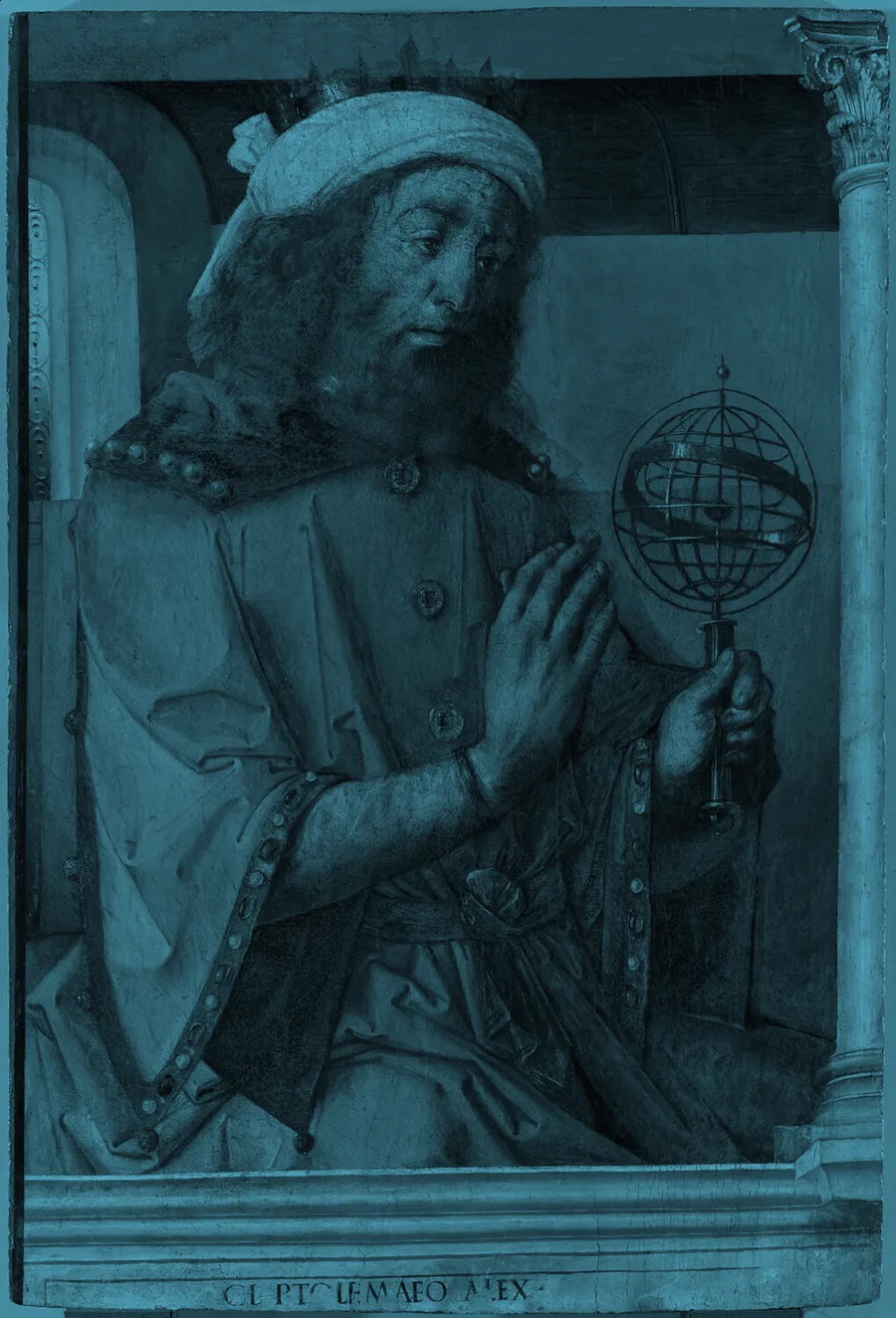
Ptolemy, in his Harmonics, kept the mathematical thread alive — connecting musical interval ratios to astronomical ones without necessarily claiming anyone could literally hear it, treating the correspondence as a structural fact about the cosmos rather than an acoustic event.
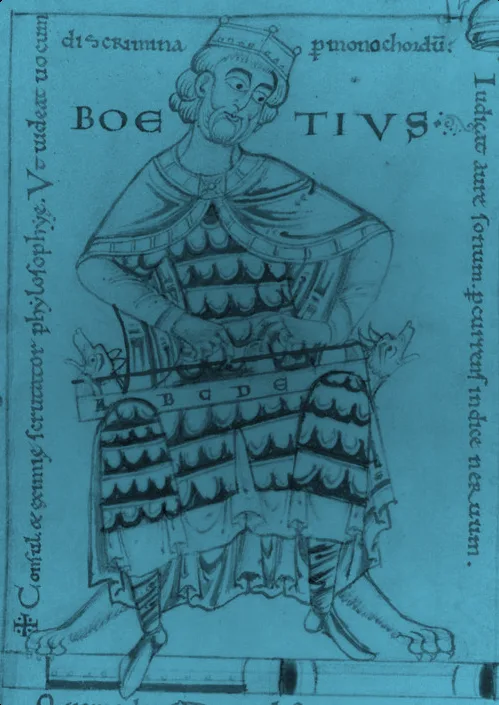
Boethius didn't add new astronomy — he preserved the idea by giving it formal structure. De Institutione Musica divides music into three kinds: musica instrumentalis (what you actually play), musica humana (the harmony of body and soul), and musica mundana — the music of the universe itself, real but inaudible to human ears. The text became required reading in medieval universities for close to a thousand years. Without that specific survival route, there's a real chance the Pythagorean idea doesn't reach the Renaissance intact enough for anyone to ever test it against real data.

Brahe never claimed the planets sing. What he did, over decades at his Uraniborg observatory, was compile the most precise naked-eye astronomical observations Europe had ever produced — measurements exact enough that small, real discrepancies in planetary motion couldn't be explained away anymore. Kepler inherited that exact dataset after Brahe's death and used it to compute the real perihelion-to-aphelion velocity ratios in Harmonices Mundi. The pattern repeats here precisely: someone has to build the precision first. Brahe is this project's NASA, four centuries early.
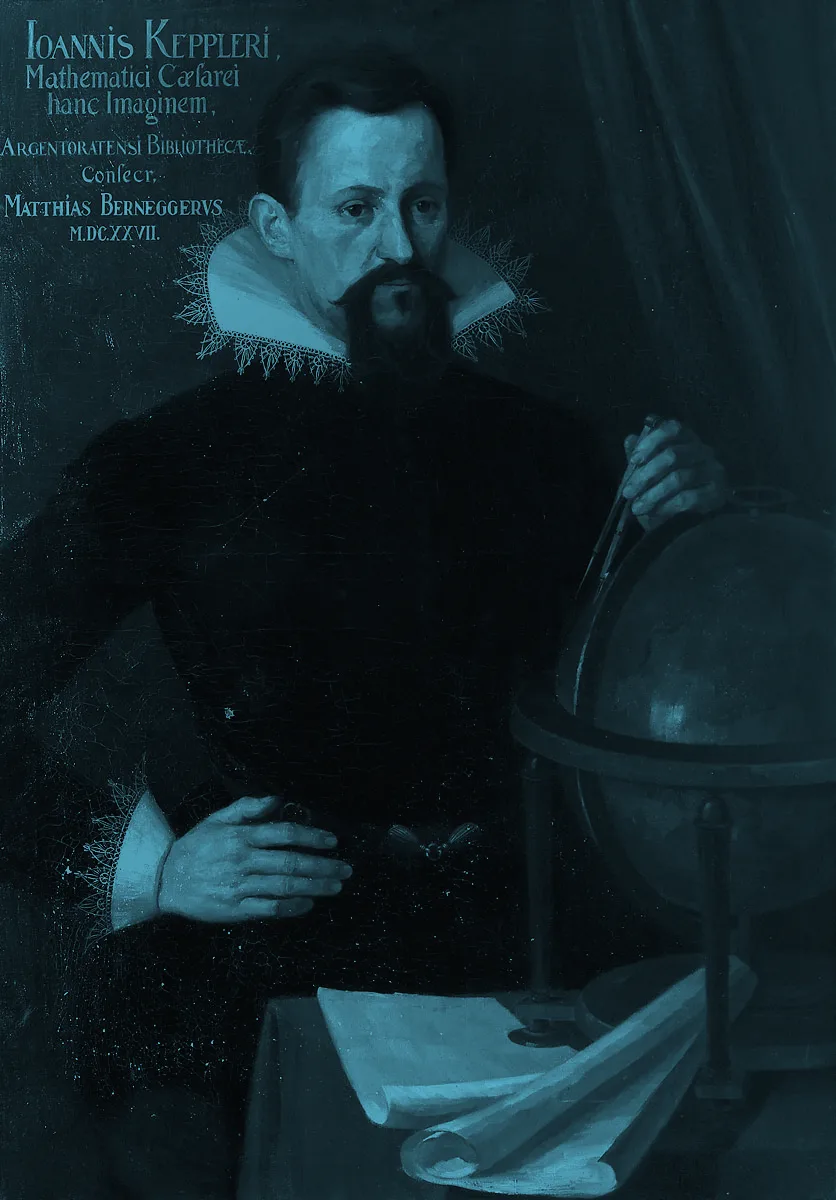
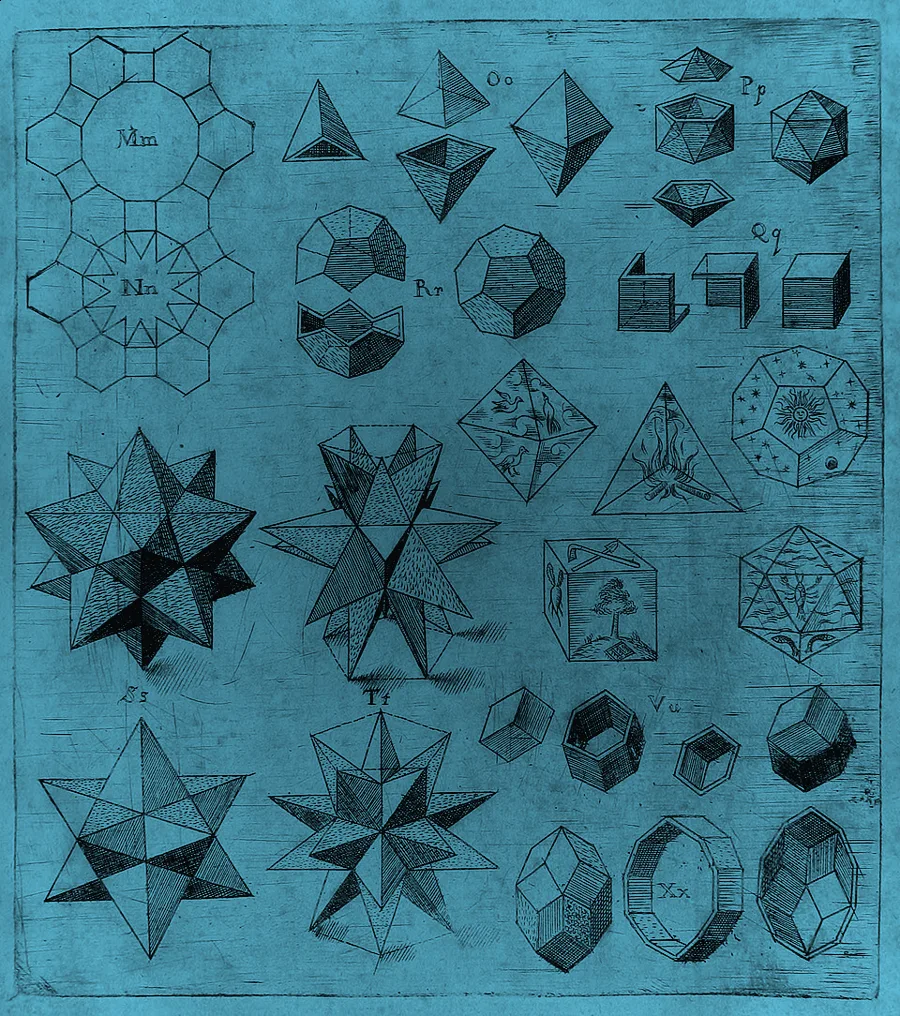
Kepler is the actual hinge. Using Tycho Brahe's observational data — the most precise available anywhere on Earth at the time — he computed the real ratio between each planet's angular velocity at perihelion and at aphelion, and assigned each one an actual musical interval based on that real, measured variation. This is not numerology layered after the fact: it's the same method this page uses, four centuries earlier, with the best real orbital data Kepler could get his hands on instead of a live ephemeris API. The instantaneous speeding-up-at-perihelion this page sonifies (through a connected synth) is exactly the phenomenon Kepler was listening for.
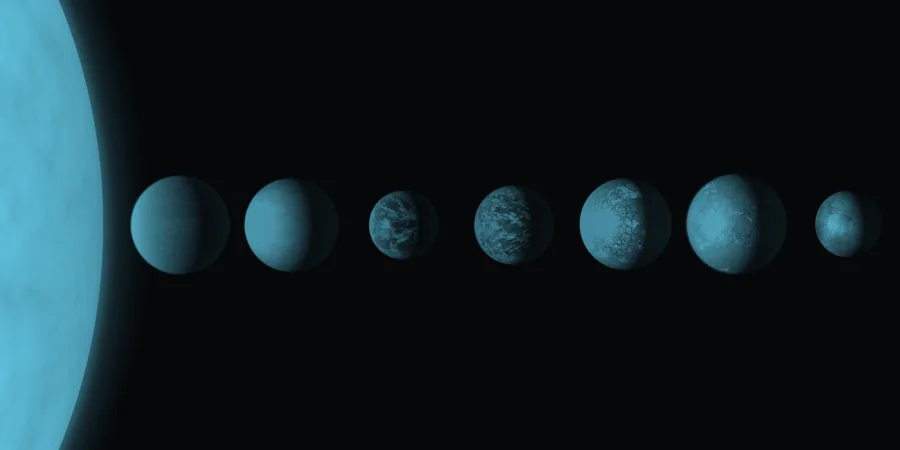
The thread resumes in a new form: researchers and sonification artists — System Sounds' work on TRAPPIST-1, the ESO's sonification of TOI-178 — built real, data-driven audio straight from orbital data. The decisive move was choosing well: both systems sit in genuine near-integer orbital resonance, real ratios close enough to simple musical intervals that each one can be nudged — rounded — onto the nearest note of an actual scale. That rounding is the craft, not a shortcut: it's what turns real astronomy into something a listener immediately recognizes as a melody, a genuinely lovely piece of translation. It's also a different choice than the one this project makes below — tuned for what sounds pleasing, rather than left exactly where the unrounded math puts it.
Every entry above solved one of two problems but not both. Pythagoras, Ptolemy, even Kepler himself, had exactly the right question and no way to keep asking it — a calculation done once, by hand, frozen at the moment of publication. System Sounds and the ESO had the live-instrument fidelity, pointed deliberately at systems chosen because their orbits already resonate cleanly. Our own solar system was left alone precisely because it doesn't cooperate.
As far as this project's own research could establish, this is the first time both problems have been solved by the same instrument at once: a live connection to the same DE441 ephemeris that flies actual spacecraft, continuously recomputing Kepler's exact quantity — instantaneous angular velocity, not average period — for the one system nobody sonifies this way, because it's the one system that refuses to resolve into a chord.
Pythagoras guessed the harmony. Kepler calculated it once, by hand, and called it finished. This is that exact question, finally given a nervous system — answered continuously, live, for the solar system we actually live in, not a tidier one chosen in advance because it would behave. The lineage above didn't end. It arrived here.
"Once, by hand, frozen at the moment of publication" no longer has to mean once. The same live connection can also be pointed at any moment between 1700 and 2300 — so the exact configuration of the sky the night Harmonices Mundi was published is just as real, and just as available, as this instant.
| Body | Cycles/sec | Regime |
|---|