SONIKOSMOS: SOL-ω SPHAERA Alpha
Play the real solar system — a real-time MPE instrument tuned to live orbital data.
Connect to begin.
Press any of the 9 assigned keys, any octave — every other key is intentionally ignored in this mode.
Real, precomputed moments from the SOL-ω Harmonic Ephemeris — rare chords, scale convergences, and other real alignments this solar system actually forms across the year, ranked by how strong each one is. Pick one below to jump straight there: it sets the date above and re-tunes everything on this page to that exact moment, live.
| Date | Kind | Event | |
|---|---|---|---|
| Loading… | |||
Compositional System & Orbital Notation
Every notation system in the history of music was invented to solve one specific problem. Neumes let a monk recall a chant he'd already memorized by ear. Guido d'Arezzo's staff, two centuries later, let a singer read a melody they'd never heard at all. Schoenberg's twelve-tone matrices gave atonal music an internal logic once tonality stopped being load-bearing. Each one is a real language, invented because the one before it couldn't say something new.
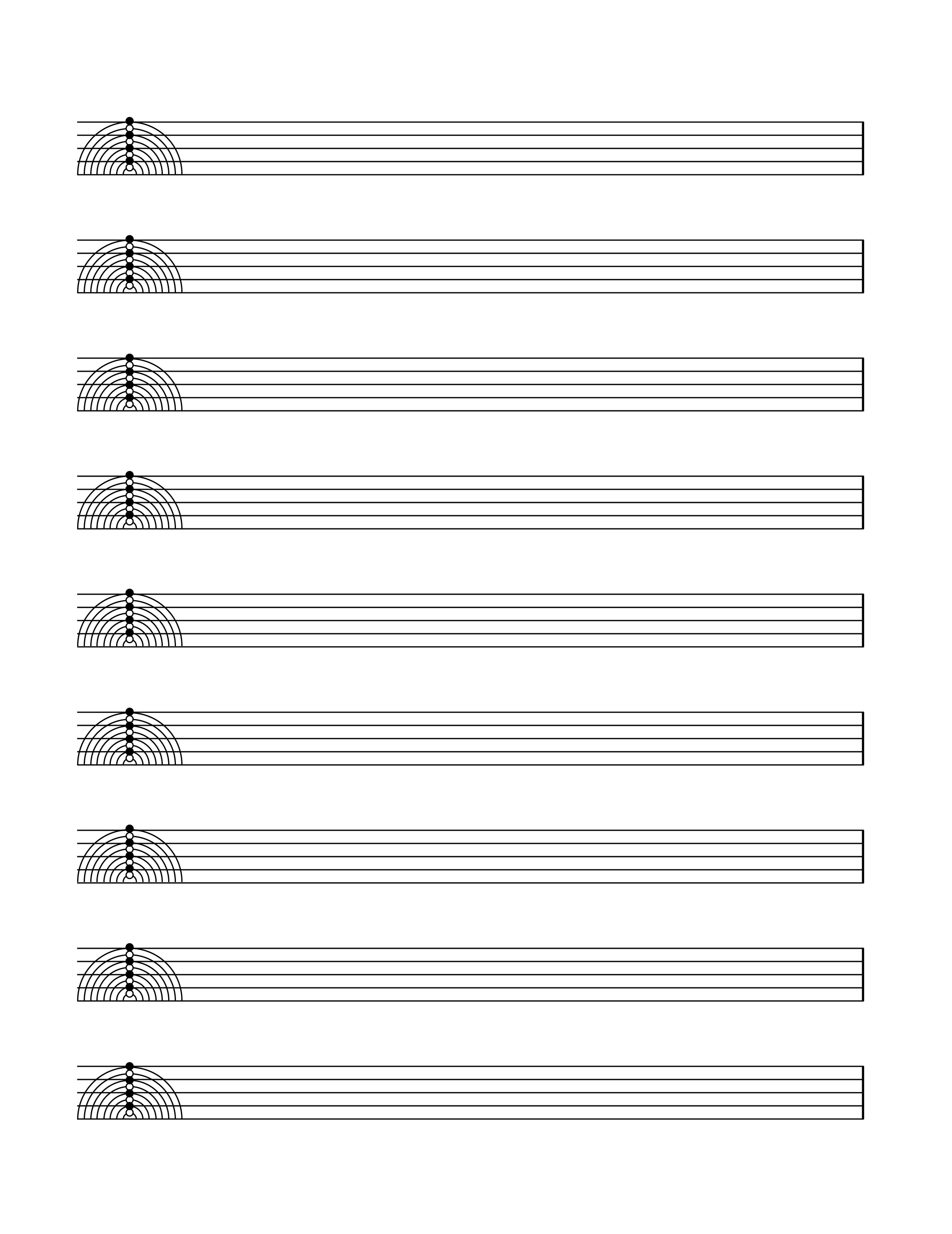
The staff below wasn't invented to write down a melody someone imagined first. It exists because nine real orbits — Mercury's frantic 88-day lap, Neptune's 165-year one — needed a shape to be written in, and the five-line staff, designed centuries ago for Gregorian chant sung by human voices in a handful of keys, was never going to hold that honestly.
Here is the part worth sitting with. Music has always been written in time and never at a time. A tempo marking, a meter, a downbeat — these tell a performer how fast to move and where the pulse falls, but a score is deliberately abstracted out of history so it can be played anywhere, on any date, and still be the same piece. Beethoven's Fifth is Beethoven's Fifth whether it's performed in 1808 or tonight. Melody, harmony, and rhythm are all relative dimensions — measured against a tonic, a beat, a bar line — never against a calendar. That abstraction isn't an accident; it's the entire premise of notation as it's existed for a thousand years.
SONIKOSMOS: SOL-ω adds a dimension no notation system before it has had a reason to need: an actual moment. Not a title, not a mood marking, not a dedication — the literal, verifiable configuration of nine real bodies in space, at one instant. Write a piece anchored to a specific date — a birthday, an anniversary, the exact moment someone was born — and the sky itself becomes the dedication: performed on that date, it sounds exactly as written, every single time, the same reliability sheet music has always had. A score doesn't have to name a date at all, though. Leave it unanchored, and the identical notation stops being one fixed piece: tune to Mars today, then again next year, and you're not performing the same phrase transposed — you're performing two different pieces, because the material itself — the cents, the chord, the scale underneath it — is a direct function of when. Either way, a SOL-ω score isn't fully specified until it decides what to do with a date: anchor to one, or deliberately live without one. Time stops being the medium music happens in, and becomes something music is about.

SONIKOSMOS: SOL-ω Compositional System is the grammar underneath it: the material isn't a note, it's an orbital position — the same planet on two different dates is two different pitches, so a composer's actual palette is dates and configurations, not scales. A chord is a moment in time: pick a date, and you've picked nine real, simultaneous frequencies that have never combined this way before, in either direction across six centuries. Modulation is a change of date, or a change of which planet you're tuned to — measurable in real cents, the way a circle of fifths measures a modulation in the tempered world. The solar system doesn't know what a major scale is, so every date generates a microtonal scale that has never existed until you look at it, and won't come back.
SONIKOSMOS: SOL-ω Orbital Notation is how that grammar gets written down. Its main form is the Planetary Staff, read with the SOL Clef shown above instead of a treble or bass clef — nine positions, Sun at the bottom, Neptune at the top, instead of the usual five lines' worth. The clef's shape isn't decorative: those are concentric orbits, drawn edge-on, one ring per body — the same arcs Kepler himself would have sketched by hand in 1619. The full span, Sun to Neptune and back, has its own name here too: a Dectave — ten positions, not an octave's eight — marked with a ledger line exactly like any other register extension.
And because these scales are inherited rather than invented, they aren't microtonality for its own sake — every deviation traces back to one verifiable physical cause: an orbit's eccentricity, and exactly where a body sits on it right now. Mercury's aggressive ellipse alone sweeps through roughly 1,444 cents — more than a full octave of continuous microtonal drift — across a single 88-day lap, while Neptune's near-circular orbit barely moves 60 cents in a century and a half. Tune to Mercury on a Tuesday, then again the following Monday, and you get two audibly different scales built from the same physical law — neither one arbitrary, neither one repeatable on purpose. A composer working in Orbital Notation has access, in principle, to an unbounded library of such scales: each one dated, each one reproducible from that date alone, and none of them existing until the moment they're looked at.
The tools further down this page — the staff, the pitch-class cluster, the circle of fifths, the pitch spiral — are what the manifesto calls Harmonic Analysis: not a separate feature, but the actual instruments a composer uses to decide whether a given moment is worth writing down at all.
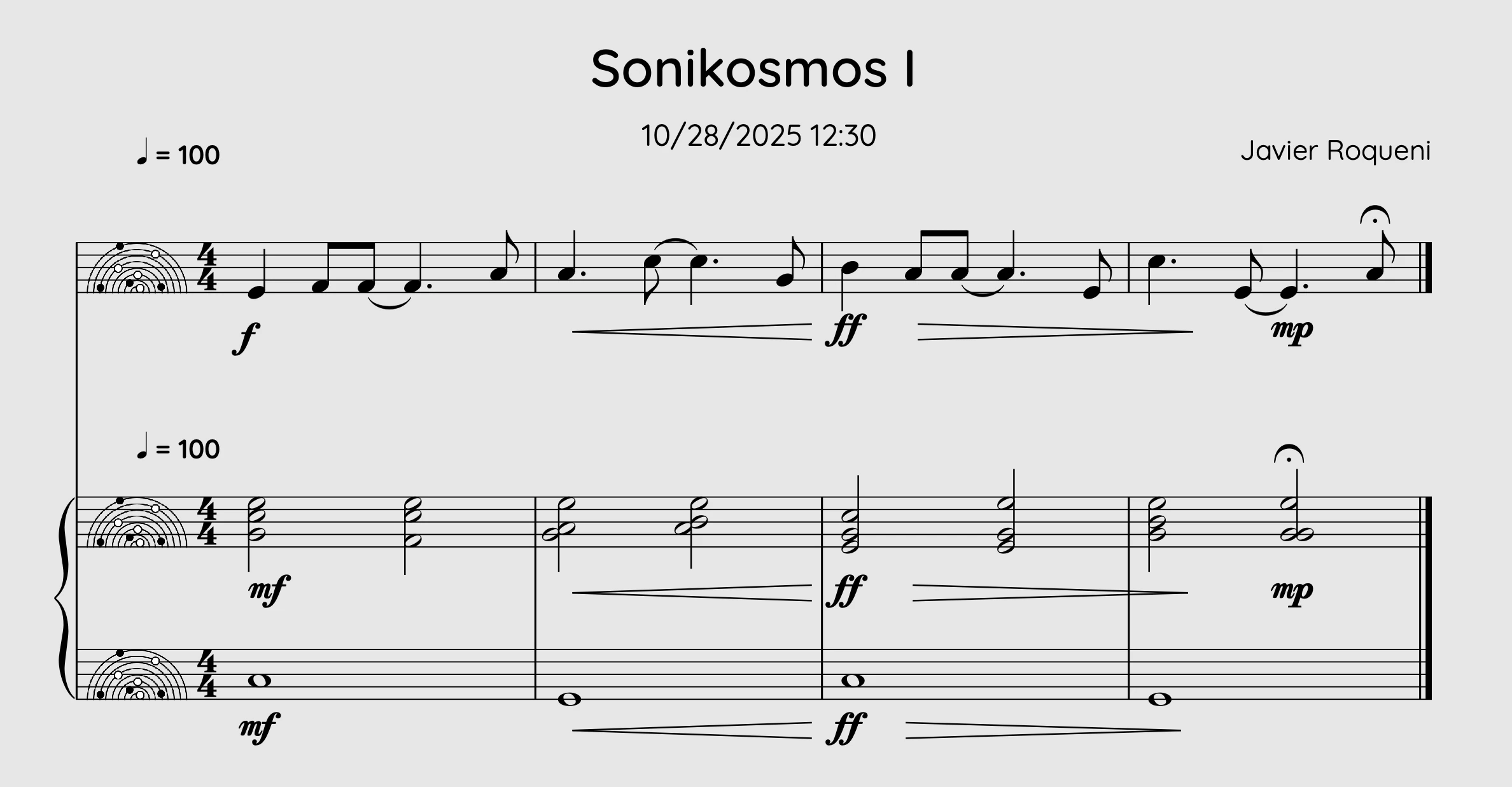
The actual chord these 9 bodies form on the picked date. The Grand Staff below is a SOL Clef, not the main Engine's pitch-sorted one — each body sits at a FIXED position, Mercury through Sun left to right, all within one octave, exactly like the Planetary Keyboard above; the real note+cents next to each one is the truth. Everything below the staff reuses the main SOL-ω Engine's analysis code (`notation.js`) directly, independent of Planetary Keyboard vs. Single-Planet Tuning mode.
All 28 pairwise intervals between the 8 planets, right now, in one view. Each line's color and weight encodes consonance: bright green = simple JI ratio (perfect 5th, major 3rd…), dark red = complex dissonant ratio. Hover any line for the exact interval. Planet labels show current sounding note and cents deviation. Updates with every data refresh.
All nine voices folded into a single octave and sorted — what this chord would be if register didn't exist. Each voice's real pitch, named as a note plus how far it actually sits from that note, in cents.
| Body | True note | True freq | PC | Cents |
|---|
What's notable right now: chord possibilities ranked by how many voices fit each shape, just-intonation singularities when any two planets land near a simple integer ratio, and other harmonic events in the moment.
The same pitch-class cluster above, replotted in the standard fifths arrangement (each step a real perfect fifth) instead of chromatic order — this is the actual lens tonal/jazz harmony uses to reason about chord and key relationships. Filled dots are active pitch classes, colored by voice; line brightness between two active dots reflects real fifths-distance, not style. The dashed ring marks the matched chord's root. If two or more planets land on the exact same pitch class, that dot splits into one wedge per voice with a small count badge — real coincidences are shown, never hidden behind one flat color. Each active pitch class is labeled with which planet(s) sit there and their exact cents deviation — the wheel position is the nearest 12-TET reference, not the truth; the cents number next to each name is the truth. No new data here, just a different read of the same notes.
Every chart above places these 9 voices on a 12-TET grid, because that's the only way to give a frequency a conventional name — but the grid is a reference, not the truth, which is why cents-from-grid is printed everywhere next to it. This chart drops the grid entirely. Each planet sits at the exact, continuous angle and radius given by log2(its real frequency ÷ the lowest real frequency currently playing) — nothing is rounded to any scale, just intonation included. One full turn is exactly one real octave; the same pitch class an octave higher lands strictly farther from center, never on top of the lower one — the same model as Shepard's "helix of pitch." The dashed spokes mark a few real just-intonation ratios (3:2, 4:3, 5:4, 6:5, 5:3) purely so you can compare an angle against them by eye; nothing is snapped to them. The amber path just connects the voices in true pitch order, so whatever real shape they trace through register-and-chroma space is visible as a shape, not a list of numbers. The reference frequency (the t=0 anchor, marked with the amber ring) isn't a fixed constant — pick which voice it is below; it only changes which frequency everything else is measured FROM, never the real frequencies themselves.
- Center / innermost ring — the reference voice's own frequency. It's only an anchor point you picked above, not a special or "correct" pitch.
- Each ring further out — exactly one real octave (a doubling of frequency) farther from the reference. Crossing one ring always means the frequency exactly doubled; nothing else does.
- Angle around the circle (chroma) — the position of a pitch within one octave, continuously, never snapped to 12 notes. This is the only thing deciding whether a dot ends up left, right, up, or down — there's no "up = higher pitch" rule the way a staff has. "Up" only means "the same chroma as the reference voice" (angle 0, by convention); every other direction is simply a different chroma, wrapping around like hours on a clock face.
- Two dots at the same angle, different radius — the exact same pitch class, a different octave. They sit on the same straight line from the center.
- Two dots close together in angle — close in pitch "color," regardless of how far apart their registers are.
- Dashed spokes — real just-intonation ratios (3:2, 4:3, 5:4, 6:5, 5:3), marked only so you can compare a dot's angle against them by eye. Nothing is forced onto them.
- Amber path — just connects the voices in true pitch order so whatever shape they form is easier to trace. It carries no musical meaning on its own.
Same pitch class (A), four real octaves apart. All four land at exactly the same angle — only the radius changes. This is what "the same note, higher" looks like here.
A literal just-intonation major triad (4:5:6): a root, a true 5:4 major third, and a true 3:2 perfect fifth. The third and fifth land exactly ON their matching dashed spokes — not a coincidence, that's what makes them "in tune" in the just sense. The triangle is what a clean major triad looks like here.
Three voices only 2–5 Hz apart — a tone cluster (check the Hz labels, that's the real truth). The chart always stretches whatever span is actually present to fill its full radius, so with nothing else around to set the scale, this tiny gap still spreads across the whole circle. In the live 9-voice chart above, the same three voices would instead collapse into a tight little knot, because Mercury-to-Neptune's much bigger spread sets a much bigger scale. The angle here is still exact either way — only how "zoomed in" the radius looks changes.
Debug log
What this actually is
The data: by default, every 60 seconds, this page asks NASA JPL's Horizons system — the Solar System Dynamics group's ephemeris service, built on the DE441 model that real spacecraft use for real navigation — for the exact position and velocity of each of the eight planets at this exact moment. Not a table of averages. Not an approximation. The same numbers a mission planner would pull to point a probe. The same query can also be aimed at a different moment entirely — pick one with the date control above.
The physics: each planet's frequency is ω(t) / 2π, where ω = |r×v| / |r|² — Kepler's Second Law, computed directly from those real position and velocity vectors. A planet near perihelion is genuinely sweeping faster, and genuinely playing a higher note, than the same planet near aphelion. That variation is real physics, not a sound effect layered on top.
The Sun is different and is labeled as such throughout: it doesn't orbit anything, so there's no live ω to query for it. Its frequency comes instead from its known equatorial sidereal rotation period (~24.47 days) — a literature constant, not a live Horizons number, because the Sun rotates differentially (faster at the equator, slower near the poles) and has no single honest "rotation rate" the way a planet has a single orbital ω at a given instant.
The tuning rule here is different from the live Engine's, on purpose: SPHAERA doesn't run a shared octave multiplier or a manual pitch slider at all. Each body's register is locked once, at connect time, from that first live fetch — the same idea as the Engine's own lock, just per-body instead of shared, since this instrument plays one body at a time rather than needing exact simultaneous ratios between all nine (see the Planetary Keyboard section above for the full explanation). Every note actually played then picks whichever 12-TET note is nearest to that body's true current frequency, bending only the small leftover in cents. Register moves; pitch class and cents never do.
Honest expectation: unlike resonance-chain exoplanet systems (TRAPPIST-1, TOI-178), our own eight planets are not in clean integer-ratio resonance with each other. What you're hearing is closer to nine close, slowly drifting microtones than a chord — and that dissonance is the actual finding, not a flaw in the synthesis.
A Brief History of Trying to Hear This
The idea that the planets' motion constitutes a form of music is at least 2,500 years old, and it was argued about from the start. Every entry below is a real attempt to answer the same question — read top to bottom, it's a lineage, not a list.
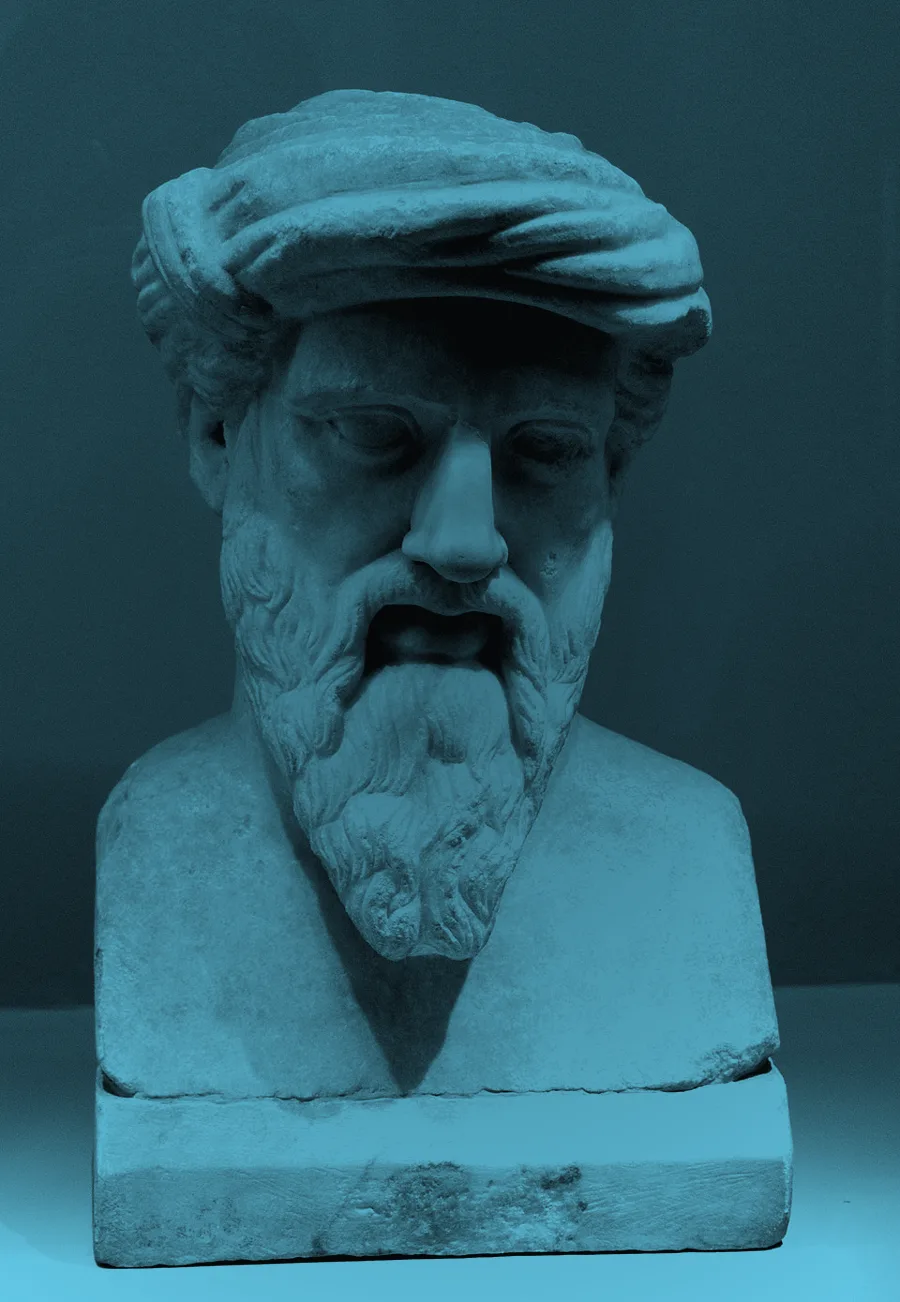
Pythagoras and his school proposed musica universalis — that each celestial body, moving at its own speed along its own orbit, produces a tone determined by that speed, and that the combined motion of all of them is a real, physical harmony. Pythagorean cosmology held that this harmony is inaudible to us not because it isn't real sound, but because we have heard it continuously since before birth — the mind filters out a sound with no silence to contrast it against.
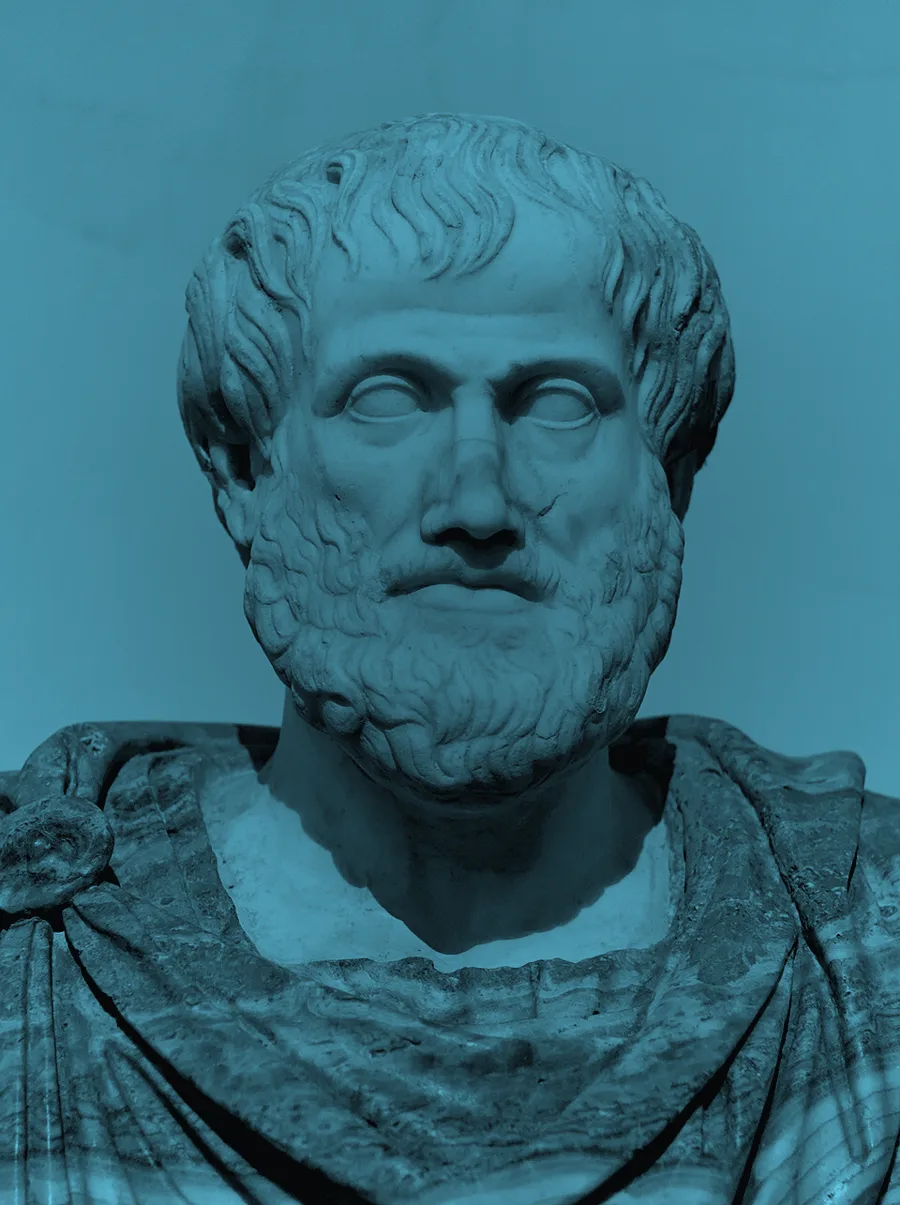
Aristotle took the idea seriously enough to refute it directly. In On the Heavens, he argued that bodies that large, moving that fast, would have to produce an unimaginably loud sound — and since we plainly don't hear one, the Pythagorean picture had to be wrong. It's worth knowing this critique existed alongside the original idea for as long as it has: "the music of the spheres" was never universally accepted as literal, even in antiquity.
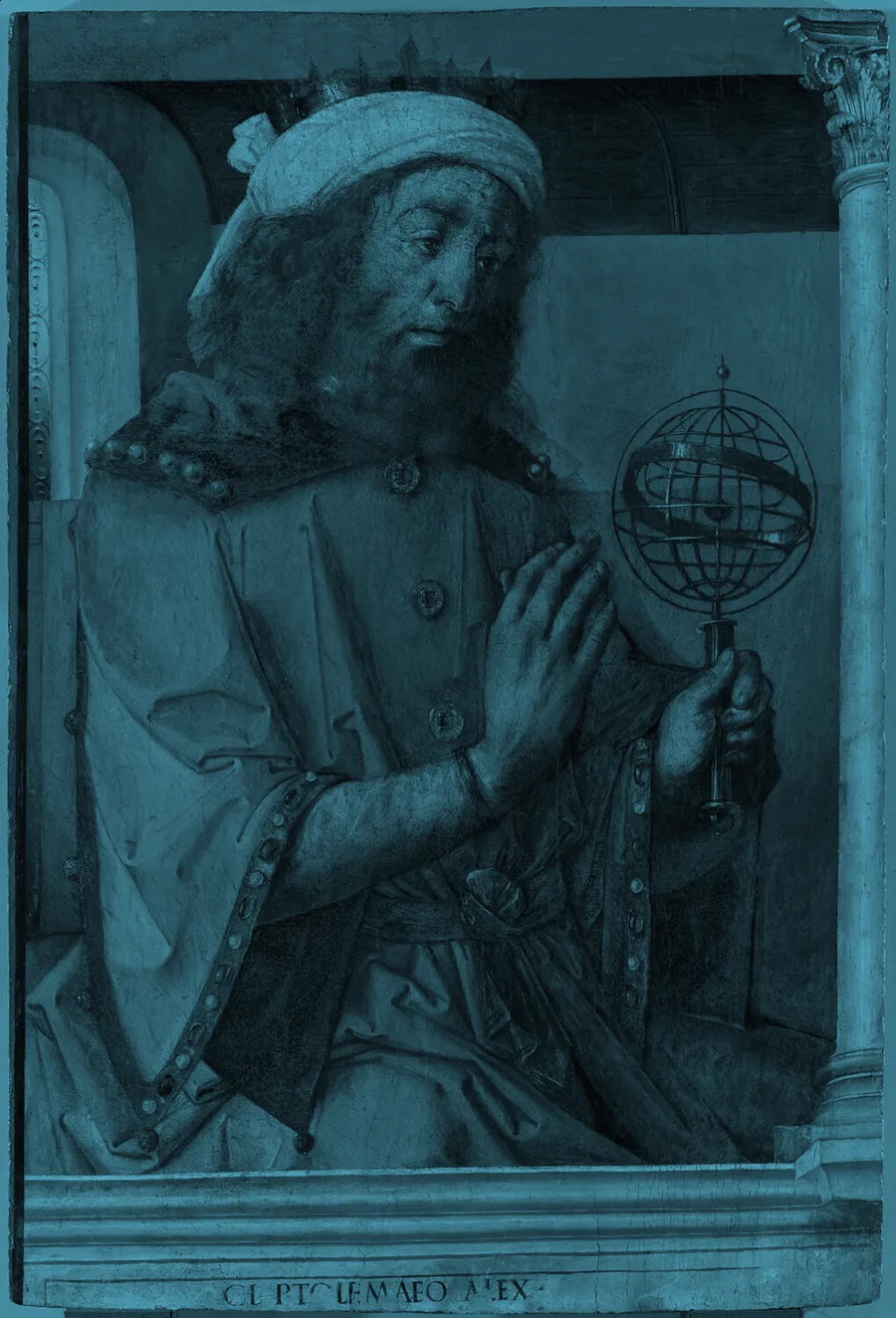
Ptolemy, in his Harmonics, kept the mathematical thread alive — connecting musical interval ratios to astronomical ones without necessarily claiming anyone could literally hear it, treating the correspondence as a structural fact about the cosmos rather than an acoustic event.
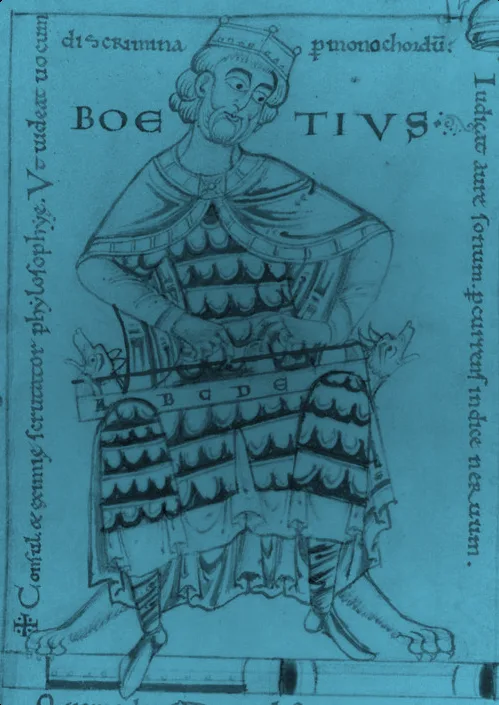
Boethius didn't add new astronomy — he preserved the idea by giving it formal structure. De Institutione Musica divides music into three kinds: musica instrumentalis (what you actually play), musica humana (the harmony of body and soul), and musica mundana — the music of the universe itself, real but inaudible to human ears. The text became required reading in medieval universities for close to a thousand years. Without that specific survival route, there's a real chance the Pythagorean idea doesn't reach the Renaissance intact enough for anyone to ever test it against real data.
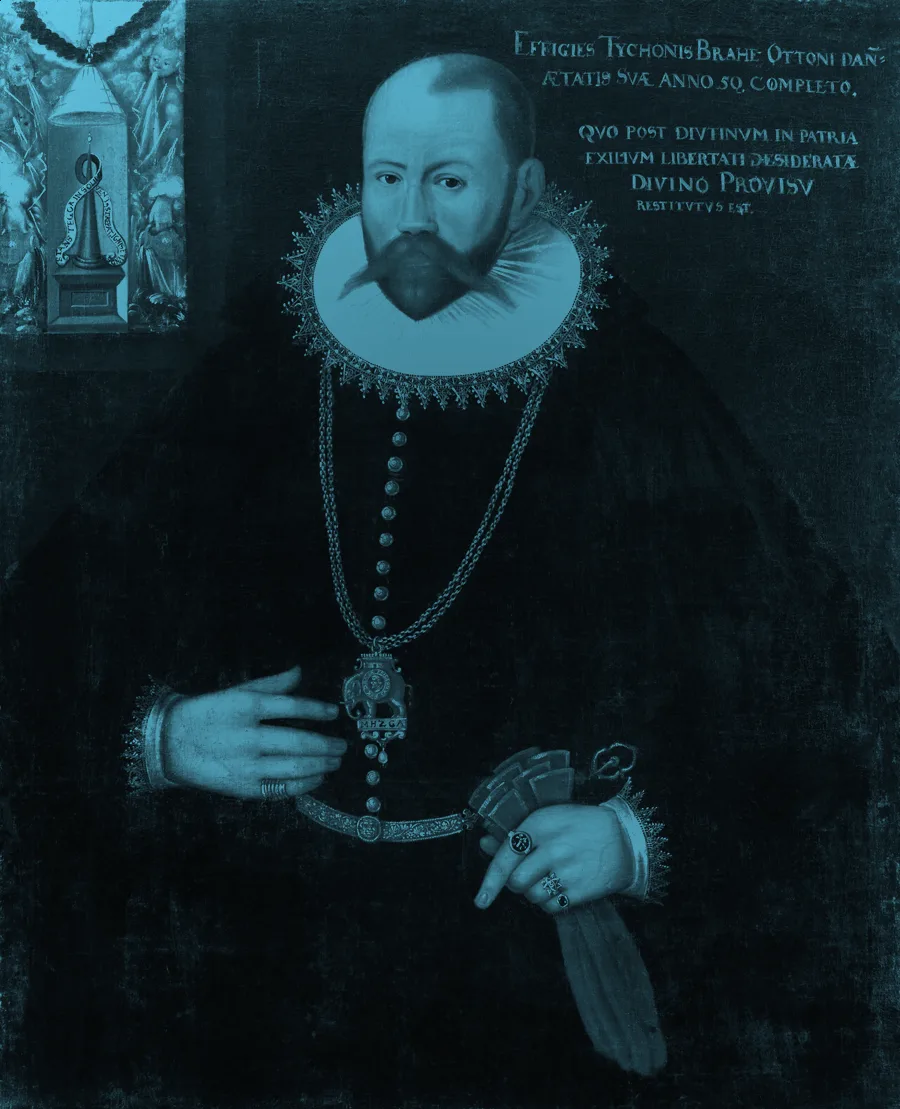
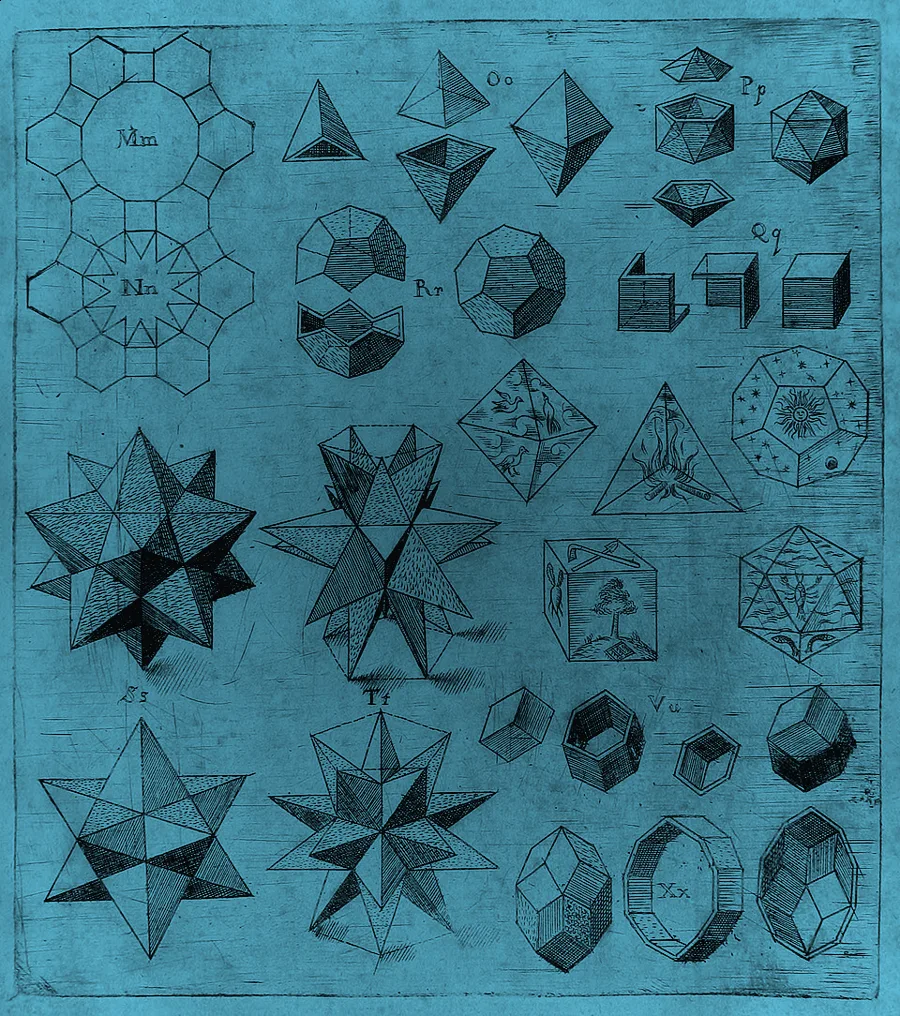
Brahe never claimed the planets sing. What he did, over decades at his Uraniborg observatory, was compile the most precise naked-eye astronomical observations Europe had ever produced — measurements exact enough that small, real discrepancies in planetary motion couldn't be explained away anymore. Kepler inherited that exact dataset after Brahe's death and used it to compute the real perihelion-to-aphelion velocity ratios in Harmonices Mundi. The pattern repeats here precisely: someone has to build the precision first. Brahe is this project's NASA, four centuries early.
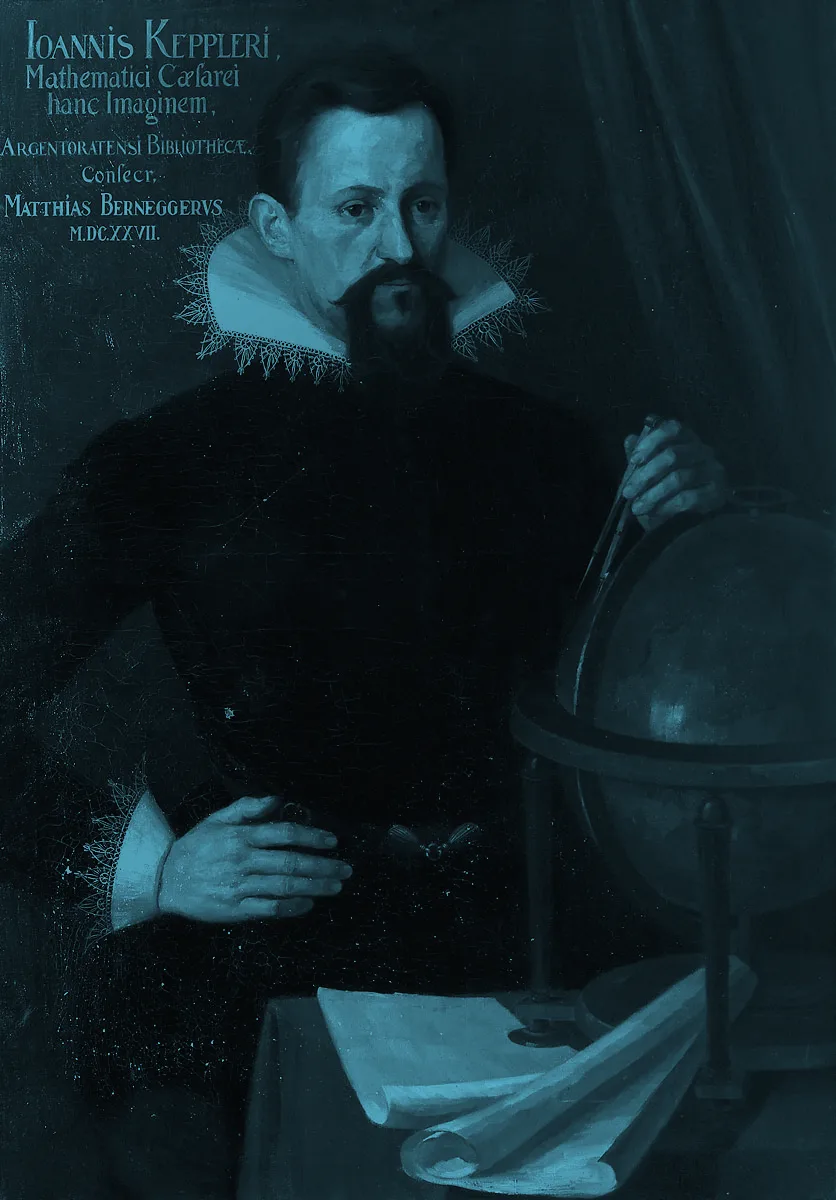
Kepler is the actual hinge. Using Tycho Brahe's observational data — the most precise available anywhere on Earth at the time — he computed the real ratio between each planet's angular velocity at perihelion and at aphelion, and assigned each one an actual musical interval based on that real, measured variation. This is not numerology layered after the fact: it's the same method this page uses, four centuries earlier, with the best real orbital data Kepler could get his hands on instead of a live ephemeris API. The instantaneous speeding-up-at-perihelion this engine sonifies is exactly the phenomenon Kepler was listening for.
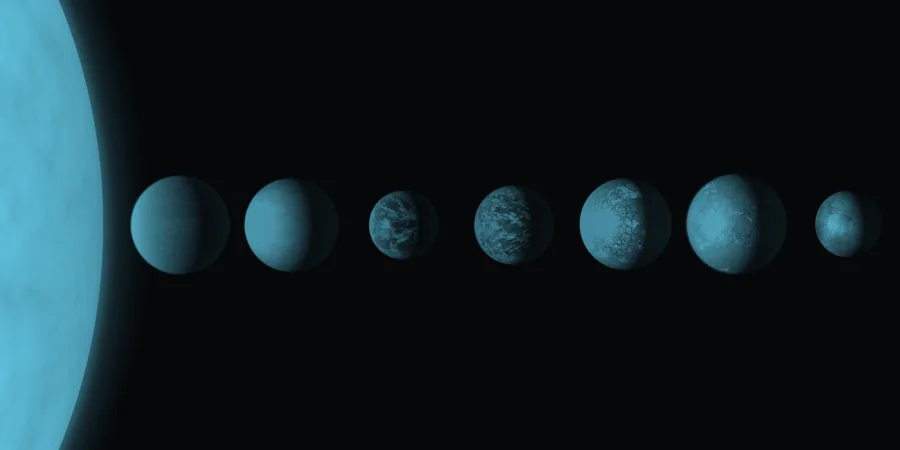
The thread resumes in a new form: researchers and sonification artists — System Sounds' work on TRAPPIST-1, the ESO's sonification of TOI-178 — built real, data-driven audio straight from orbital data. The decisive move was choosing well: both systems sit in genuine near-integer orbital resonance, real ratios close enough to simple musical intervals that each one can be nudged — rounded — onto the nearest note of an actual scale. That rounding is the craft, not a shortcut: it's what turns real astronomy into something a listener immediately recognizes as a melody, a genuinely lovely piece of translation. It's also a different choice than the one this project makes below — tuned for what sounds pleasing, rather than left exactly where the unrounded math puts it.
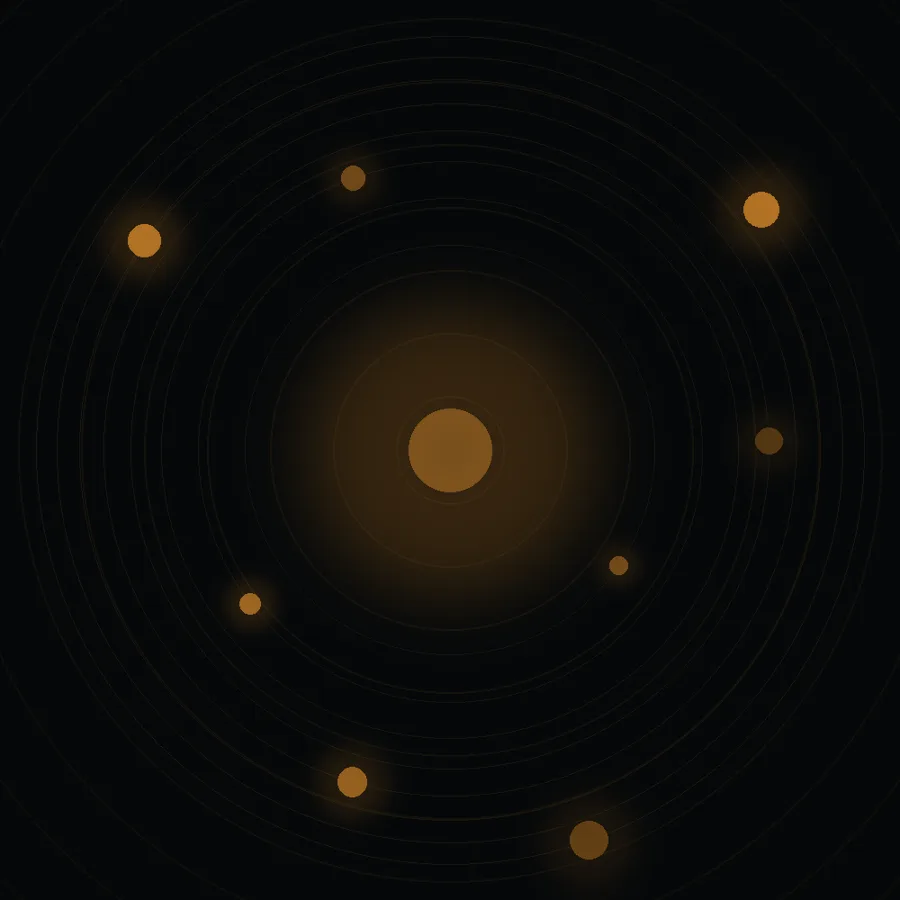
Every entry above solved one of two problems but not both. Pythagoras, Ptolemy, even Kepler himself, had exactly the right question and no way to keep asking it — a calculation done once, by hand, frozen at the moment of publication. System Sounds and the ESO had the live-instrument fidelity, pointed deliberately at systems chosen because their orbits already resonate cleanly. Our own solar system was left alone precisely because it doesn't cooperate.
As far as this project's own research could establish, this is the first time both problems have been solved by the same instrument at once: a live connection to the same DE441 ephemeris that flies actual spacecraft, continuously recomputing Kepler's exact quantity — instantaneous angular velocity, not average period — for the one system nobody sonifies this way, because it's the one system that refuses to resolve into a chord.
Pythagoras guessed the harmony. Kepler calculated it once, by hand, and called it finished. This is that exact question, finally given a nervous system — answered continuously, live, for the solar system we actually live in, not a tidier one chosen in advance because it would behave. The lineage above didn't end. It arrived here.
"Once, by hand, frozen at the moment of publication" no longer has to mean once. The same live connection can also be pointed at any moment between 1700 and 2300 — so the exact configuration of the sky the night Harmonices Mundi was published is just as real, and just as available, as this instant.